The Galley
  • Home
  • Recipes
    • Spring >
      • Lemon Drops
      • Lemonade Syrup
      • Lemon & Buttermilk Donuts
      • Rice Paper Rolls
      • Olive Crusted Lamb
    • Summer >
      • Breakfast Berry Cookies
      • Zucchini Noodles
      • Greek Tomato Fritters
      • Oysters Japanese Style
      • Artichokes with Tomato Vinaigrette
      • Feta & Onion Borek
      • Blackcurrant Cheesecake
      • Eggplant, Tomato Salad
    • Autumn >
      • Apple Pie
      • Tuna Tataki
      • Apple Cider Pork Chops
      • Turkish ​Peppers
      • Pear & Almond Sponge
    • Winter >
      • Tamarillo Beef Bourginone
      • Local Fresh Fish Pie
      • Middle Eastern chicken
      • Lamb Cashew Curry
    • Winter Deserts >
      • Rhubarb and Orange Crumble
      • Chocolate Fudge Pudding
      • Lemon Sago Pudding
    • Breads >
      • Sourdough Bread & Starter
      • Grain Loaf
      • Cinnamon Raisin Loaf
      • Soda Bread
      • Naan Bread
    • Balinese Recipes >
      • Beef Satay with Fragrant Yellow Rice
      • Sweet Tempeh & Wok Fried Vegetables
      • Lemongrass Chicken with Spinach
    • Greek Recipes >
      • Spanakopita
      • Stuffed eggplants baked in a yoghurt sauce
      • Fish Kebabs
      • Cherry Tomato, Feta & Mint Keftedes
      • Semolina, orange & almond syrup cake
      • BBQ leg of lamb with lemon potatoes & olives
    • Mairangi Bay Newsletter Seasonal Recipes >
      • Strawberry and Rhubarb Jam
      • Sweet n Sour Carrot Salad
      • Marmalade
      • Apple Crumble Oat Muffins
      • Lamb, Quinoa & Tomato Soup
      • Sultana Cake
      • Feijoa Conserve
      • Cherry Clafoutis
      • Beetroot, Apple & Blue Cheese Salad
      • Apple and Almond Tart
      • New ANZAC biscuits
      • Feijoa and Lime Poppyseed Muffins
      • Celebration Apple Cake
      • Cinnamon Oysters
  • About Tracey
    • Profile
  • Commercial & Publishing Work
    • Editorial Features
    • Recipe Writing & Styling >
      • Kiwi Gardener Magazine
      • Good Magazine
      • Air NZ Kia Ora Magazine
      • NZ Life & Leisure Magazine
      • Taste Magazine
      • Nadia Magazine
      • Healthy Food Guide
      • Menu Consultation
    • Advertising Creative
  • Community Projects
  • Food & Travel
    • India 2017
    • Bali, Indonesia
    • Greece
    • Sydney, Australia
    • Melbourne, Australia
    • New Zealand
    • From my kitchen
    • My Instagram
  • Contact

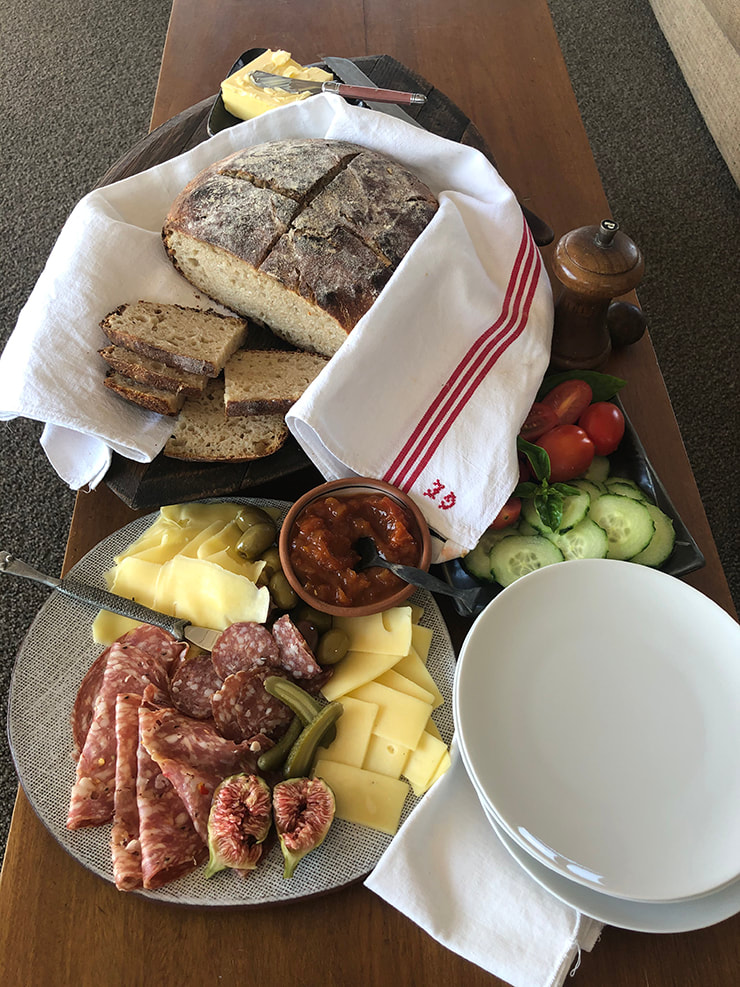
Sourdough Bread
​with Homemade Starter

Sourdough Bread Recipe
​with Homemade Starter

Picture
Picture

​Sourdough Starter

Sourdough Starter
The process of making a sourdough bread begins on the night before you want to make your bread (or more precisely, at least 8–10 hours before you start mixing the dough).

Take a large jar or bowl.
Add 1 Cup of plain flour
1 cup of filtered water
​

Mix well using a fork, then leave it on the bench in a warm and airy place, covered with a cloth or paper (with fork holes in it) leave overnight.

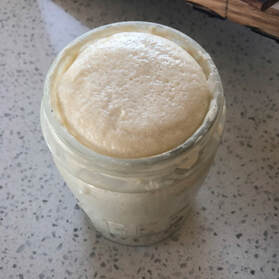
THIS IS A FRESH SOURDOUGH STARTER.
It is best to leave the starter for two or three days develop a sour flavour…
…The longer it is left then fed, over time it will develop better flavour.


After two days, feed the starter with ½ cup of plain flour and ½ a cup of filtered water.  This will feed the sourdough and make it active and bubbly.

This process is dependent on the atmosphere and weather. For example, in winter the sourdough can take a day of two to activate but in summer it will need a lot less time.

I feed the starter every few days (if you would like to bake more often, then feed it daily to keep it active.

When the starter is active it should be used within a 24-hour period to make bread. This will give the dough its best start and chance for the yeasts to grow.

​

​Sourdough Bread

Ingredients

900g plain flour
100g Rye flour or wholemeal flour
600ml water (approximately)
275g/1 cup sourdough starter
¼ cup extra virgin olive oil
20g salt/4 teaspoons

Method

Step 1 – Make the dough
Mix all ingredients except salt in a large bowl or the bowl of a kitchen mixer. Make a well in the centre then pour in the sourdough plus most of the water. Mix until it starts to form a dough. Add olive oil and mix well to incorporate, adding enough water to make a firm dough.

Cover the bowl with a damp linen cloth or an oiled piece of plastic wrap and leave it aside at room temperature for 30 minutes.

After 30 minutes, add the salt and fold it into the dough until it feels fully incorporated.

Step 2 – Strengthen the dough
To knead sourdough is a gentler process.
Here’s how you do it:

•    Without taking the dough out, grab one corner of the dough, and stretch that corner over the dough.
•     Do this lightly at first, and then, as the dough gets gassy after a couple of hours, start handling the dough in a gentler manner.
•    Leave covered with a damp tea towel or oiled plastic wrap for about 8 hours in a warm place. (Strengthen the dough from time to time.)

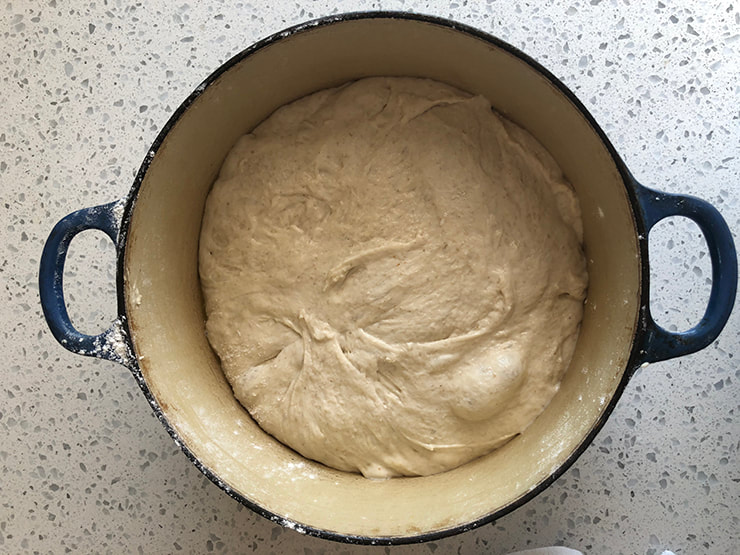
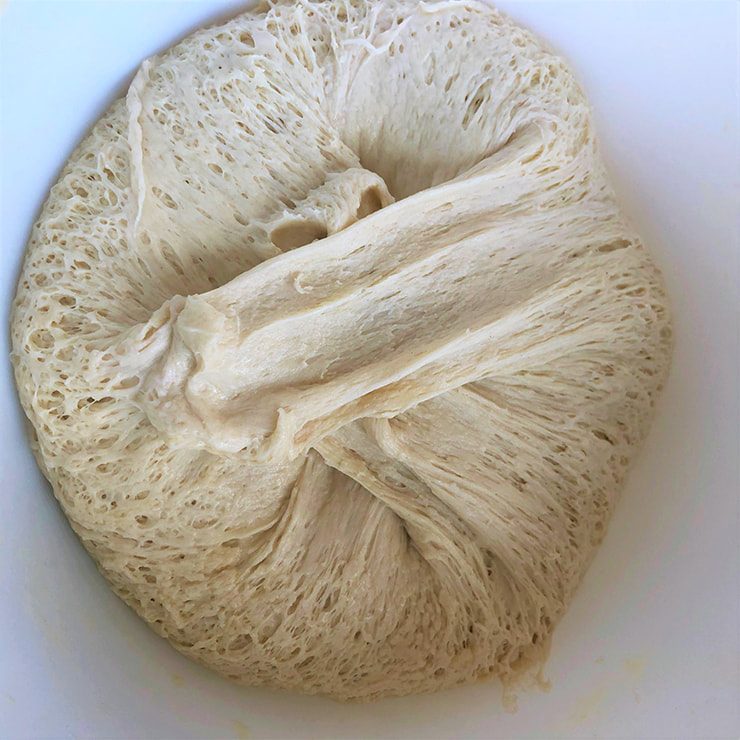
Step 3 – Slow Rise and ferment     After this time, it can be left overnight in a cool place or in the fridge, where it will stay stable.

Next day after the slow rise the dough should look like this. Fold it to strengthen.
​

Always bring it back to room temperature and leave for a few hours before shaping the loaves.

Step 4 – Shape the breads
​
Once you decide your dough is ready to be shaped, divide the dough into two and then shape both pieces into round/rectangular loaves for a loaf tin).
For a better rise, place each loaf into a well-oiled and floured earthenware or metal casserole (lidded) baking dish. This term is called a ‘Dutch Oven’.

Step 5 – The final rise
Let the shaped breads prove, if left in a cool environment the loaves can take up to 7 hours to prove. If left in a warm environment, then leave for 3–4 hours.

Step 6 –  Bake the breads
And now, finally, you get to bake the bread (at 230°C / 446°F)!
Bake one loaf at a time in a domestic oven, this will enable the oven to perform better and cook the loaf properly.

For best results, use a ‘Dutch oven’ or otherwise cover the bread with foil for the first 35 minutes to capture the steam escaping from the bread dough. This prevents the crust from forming too early and gives the bread a chance for a big final rise.

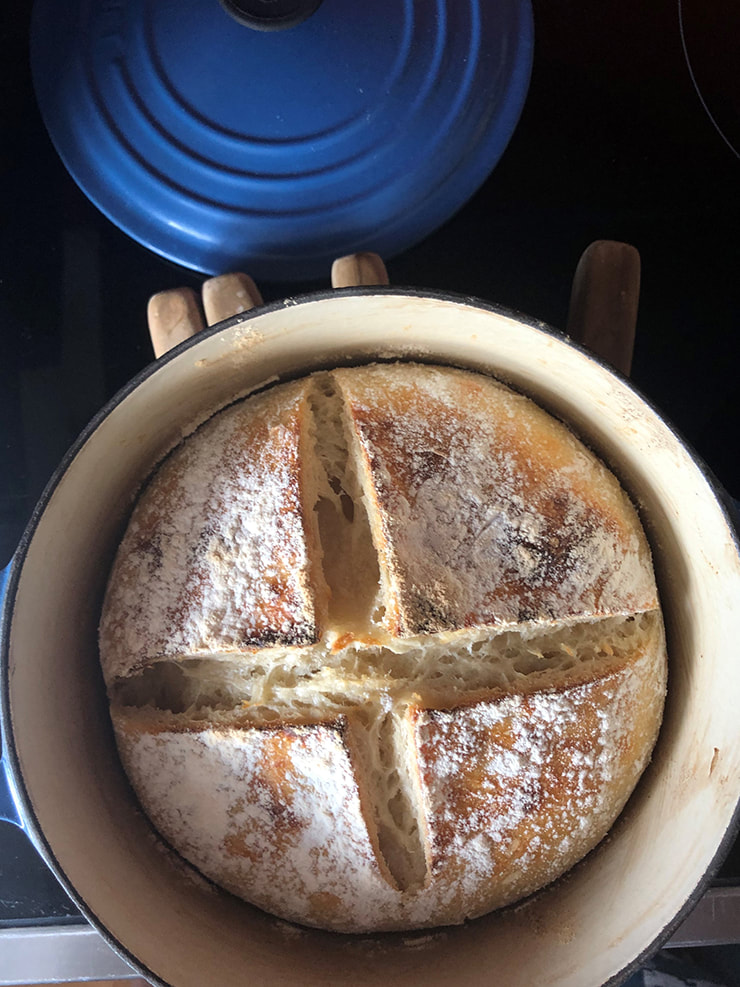
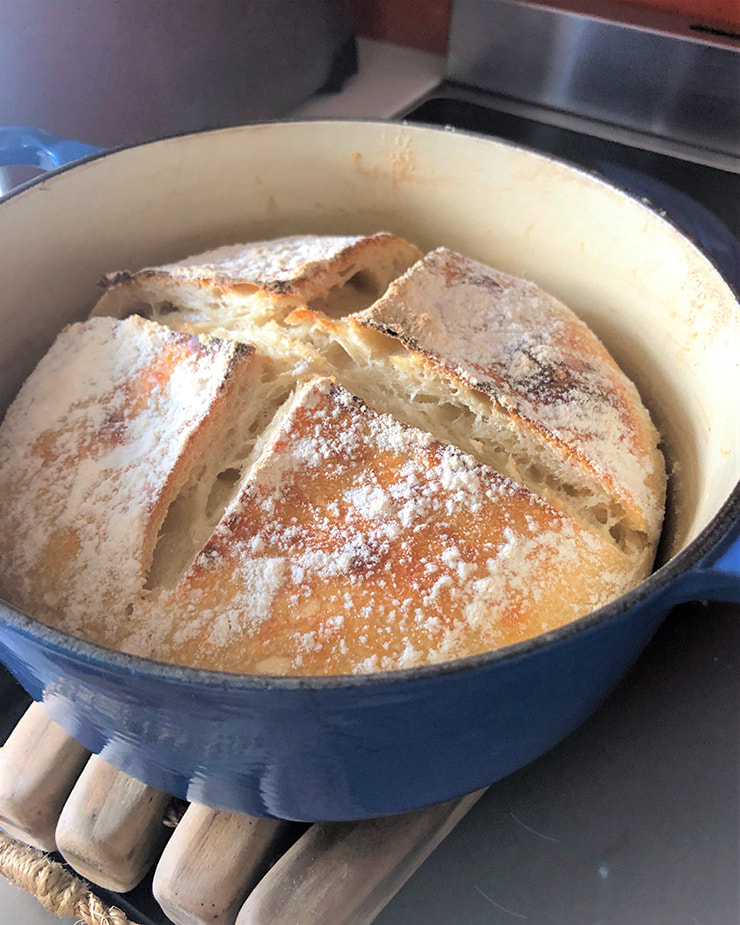
Remove the loaf from the oven briefly, removing the cover then take a short-serrated knife and slash the top of each loaf into a cross, toss a little flour across the surface. With the lid off return to the hot oven for another 10 to 15 minutes to give the bread a deep, golden brown slightly dark crust.

Click here to download this recipe
Picture
Proving Time: 4–7 hours depending on ambient temperature
Cooking time: 50 minutes 
Makes: 2 loaves 
Credit: Styling, Food Preparation & Photography,
​Tracey Sunderland.

You may need to turn the oven up to 240–250°C to get a more golden crust for the final 10 minutes. ​

​Notes:
Sour dough is a slow bread, because the yeast is natural it takes longer to activate which can be easy to work with (as the rise can take from 24 to 36 hours) which is great because it can be started and left overnight before baking at a time that suits your routine best.


Sourdough bread is made by the fermentation of dough (flour and water) using naturally occurring lactobacilli and yeast. Natural yeast exists organically in the flours we use and the air around us. This process has been used for thousands of years in baking and the production of alcoholic beverages. Sourdough has been used for hundreds of years in many countries and cultures around the world in these various varieties of daily bread. (Originally the following countries used a sourdough culture to make their bread using a variety of different flour types.) Danish, rugbrod ryebread; German, pumpernickel; American, Sanfrancisan Sourdough; Ethiopia, Injera, flat bread; Somalia and Yemem, lahoh; India, idly and dosa.
​

The exact duration of the fermentation depends on many things, including how active your starter is and the temperature in your kitchen. As a natural yeast is very helpful not least for ‘home baking’ but also for health reasons. Sourdough is often easier to digest and with digestive problems on the rise, those with compromised guts are finding breads made with a longer fermentation (rise periods) to be more easily digested. I find that the longer the dough is left then the lighter the loaves will be, plus have a better flavour and texture.
Picture

3. Slow rise and ferment

Picture

​5. The final rise

Picture

​6. Bake the Breads

Picture

    CONTACT TRACEY

Submit
Picture

Email

phone

[email protected]
+ 64 9 476 0265
Picture
Follow Tracey
on Instagram
Picture

  • Home
  • Recipes
    • Spring >
      • Lemon Drops
      • Lemonade Syrup
      • Lemon & Buttermilk Donuts
      • Rice Paper Rolls
      • Olive Crusted Lamb
    • Summer >
      • Breakfast Berry Cookies
      • Zucchini Noodles
      • Greek Tomato Fritters
      • Oysters Japanese Style
      • Artichokes with Tomato Vinaigrette
      • Feta & Onion Borek
      • Blackcurrant Cheesecake
      • Eggplant, Tomato Salad
    • Autumn >
      • Apple Pie
      • Tuna Tataki
      • Apple Cider Pork Chops
      • Turkish ​Peppers
      • Pear & Almond Sponge
    • Winter >
      • Tamarillo Beef Bourginone
      • Local Fresh Fish Pie
      • Middle Eastern chicken
      • Lamb Cashew Curry
    • Winter Deserts >
      • Rhubarb and Orange Crumble
      • Chocolate Fudge Pudding
      • Lemon Sago Pudding
    • Breads >
      • Sourdough Bread & Starter
      • Grain Loaf
      • Cinnamon Raisin Loaf
      • Soda Bread
      • Naan Bread
    • Balinese Recipes >
      • Beef Satay with Fragrant Yellow Rice
      • Sweet Tempeh & Wok Fried Vegetables
      • Lemongrass Chicken with Spinach
    • Greek Recipes >
      • Spanakopita
      • Stuffed eggplants baked in a yoghurt sauce
      • Fish Kebabs
      • Cherry Tomato, Feta & Mint Keftedes
      • Semolina, orange & almond syrup cake
      • BBQ leg of lamb with lemon potatoes & olives
    • Mairangi Bay Newsletter Seasonal Recipes >
      • Strawberry and Rhubarb Jam
      • Sweet n Sour Carrot Salad
      • Marmalade
      • Apple Crumble Oat Muffins
      • Lamb, Quinoa & Tomato Soup
      • Sultana Cake
      • Feijoa Conserve
      • Cherry Clafoutis
      • Beetroot, Apple & Blue Cheese Salad
      • Apple and Almond Tart
      • New ANZAC biscuits
      • Feijoa and Lime Poppyseed Muffins
      • Celebration Apple Cake
      • Cinnamon Oysters
  • About Tracey
    • Profile
  • Commercial & Publishing Work
    • Editorial Features
    • Recipe Writing & Styling >
      • Kiwi Gardener Magazine
      • Good Magazine
      • Air NZ Kia Ora Magazine
      • NZ Life & Leisure Magazine
      • Taste Magazine
      • Nadia Magazine
      • Healthy Food Guide
      • Menu Consultation
    • Advertising Creative
  • Community Projects
  • Food & Travel
    • India 2017
    • Bali, Indonesia
    • Greece
    • Sydney, Australia
    • Melbourne, Australia
    • New Zealand
    • From my kitchen
    • My Instagram
  • Contact